We have a unique summer job here in Wyoming, watering about 200 acres for grass hay. The hay is used to feed the horses that Brad and Joanne board over the winter for several different companies. Here’s a few photos of their “customers” before they all leave for their summer homes.

The most labor intensive part of our job is right at the beginning of the season when we put the water pipes out in the field. Brad and Joanne help us with this part, as it takes 4 people to complete this process. There are four fields that are watered with the pipes. Each field is about a quarter mile wide, so there are a lot of pipes to install each spring. And in the fall, we will disassemble them and put them back in a storage area.

The reason the pipes are not kept in the fields year round, is the horses would kick and damage the pipes. The pipes are stored away from the horses during the winter. Although the horses like to look over the fence at them! It’s an expensive play toy for them!

I get the “easy” job, driving the tractor with a trailer full of pipes out to the field.
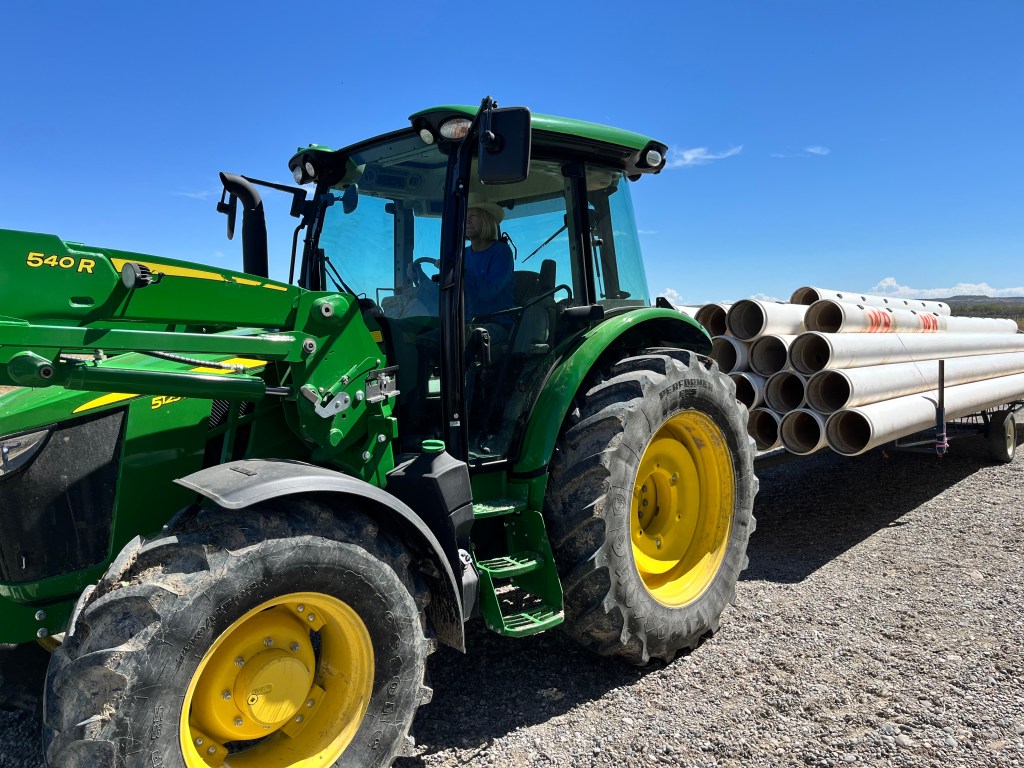
Let me tell you, this is not your grandfathers tractor! Driving the tractor is more like a big video game, with all the buttons and joysticks.
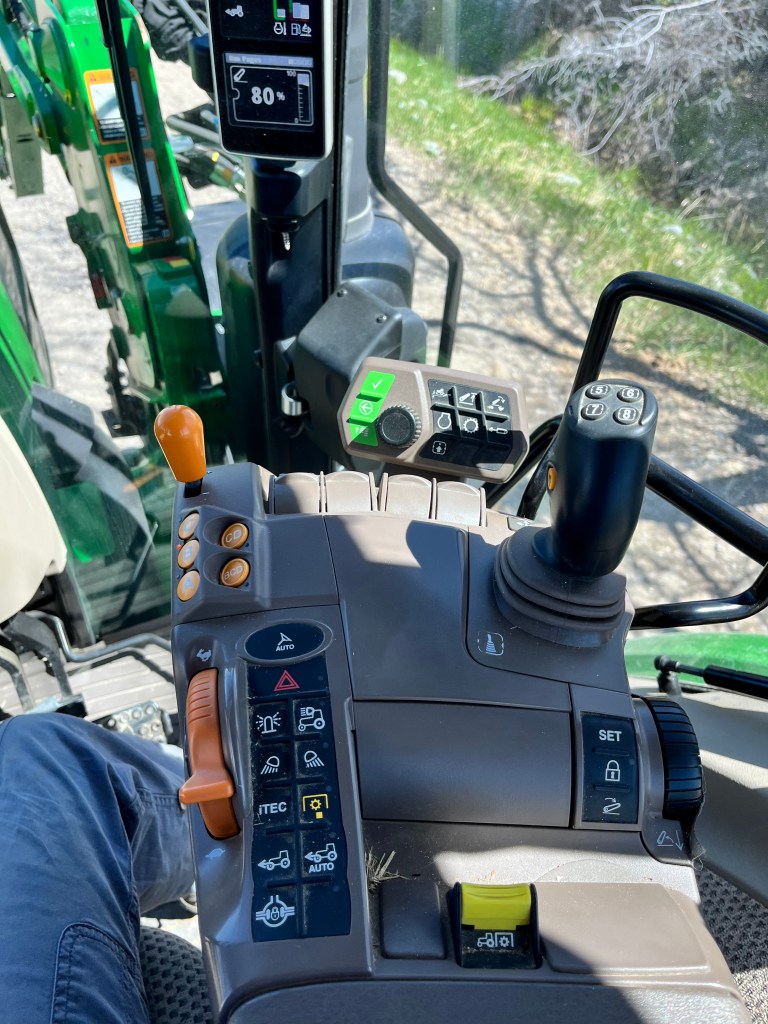
When the tractor first starts up, all kinds of symbols light up on the control panel.

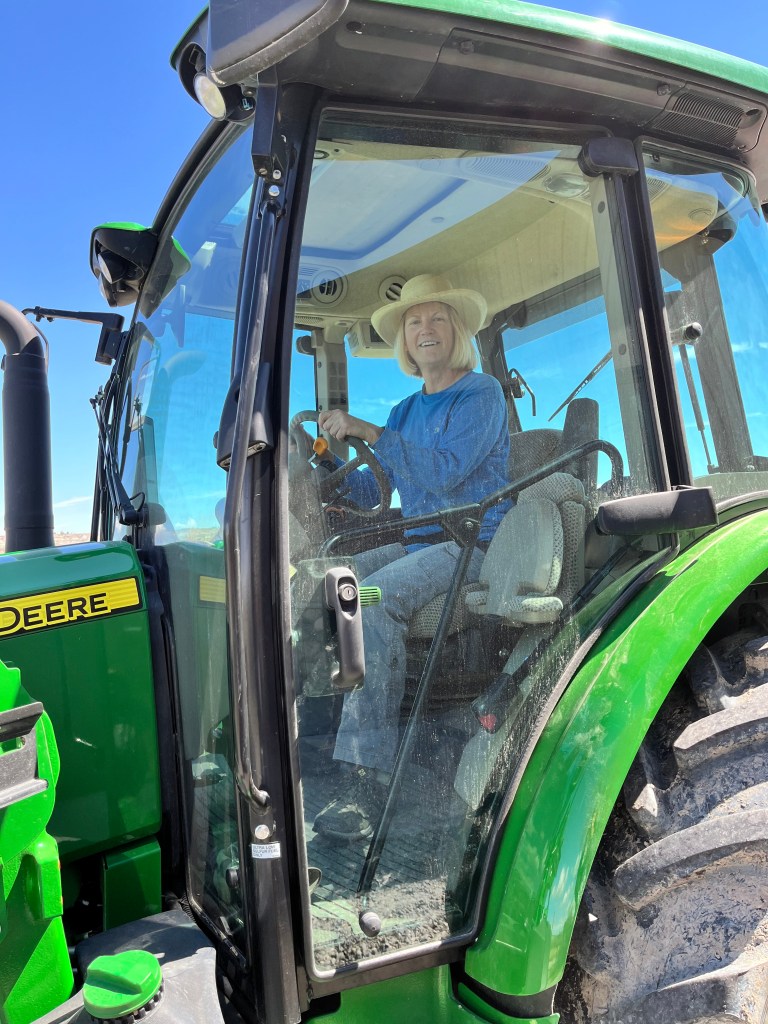
It’s very comfortable to drive.
Dan, Brad and Joanne lead the way out in the fields in the ATV.

Brad, Joanne and Dan install pipe starting at the gate valves in the fields.

My job is to drive the tractor at a slow pace, while Brad and Dan pick up the pipes and install them along the fields. Here’s a shot from the rear view mirror of the tractor showing the 30′ long 12″ diameter pipes..


Here’s a view out the back window of the tractor.

Below we are crossing over from one field to the next.

The pipes have gate valves on them, that open and close to let the water flow out and irrigate the fields.

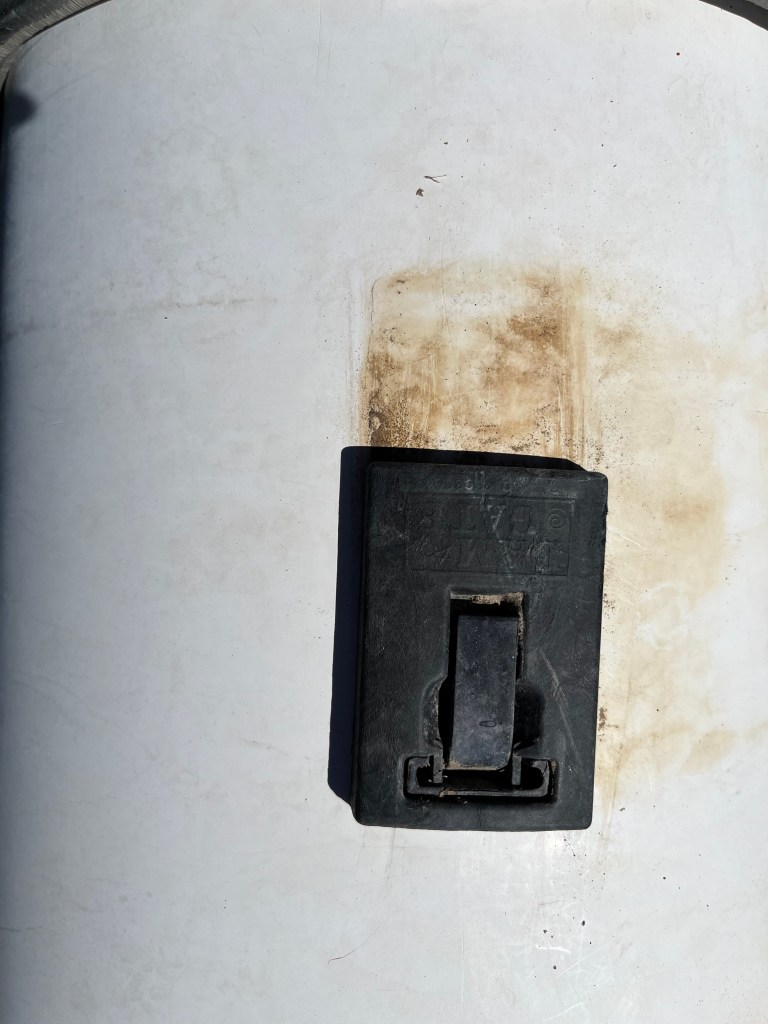
When the pipes are all connected, and the water has been turned on, we will irrigate one field at a time. We open the gate valves on 3-4 pipes in the morning, and then close those pipe valves in the evening. Then we open another 4-5 pipes in the evening, and let them run overnight. We repeat the process every day.
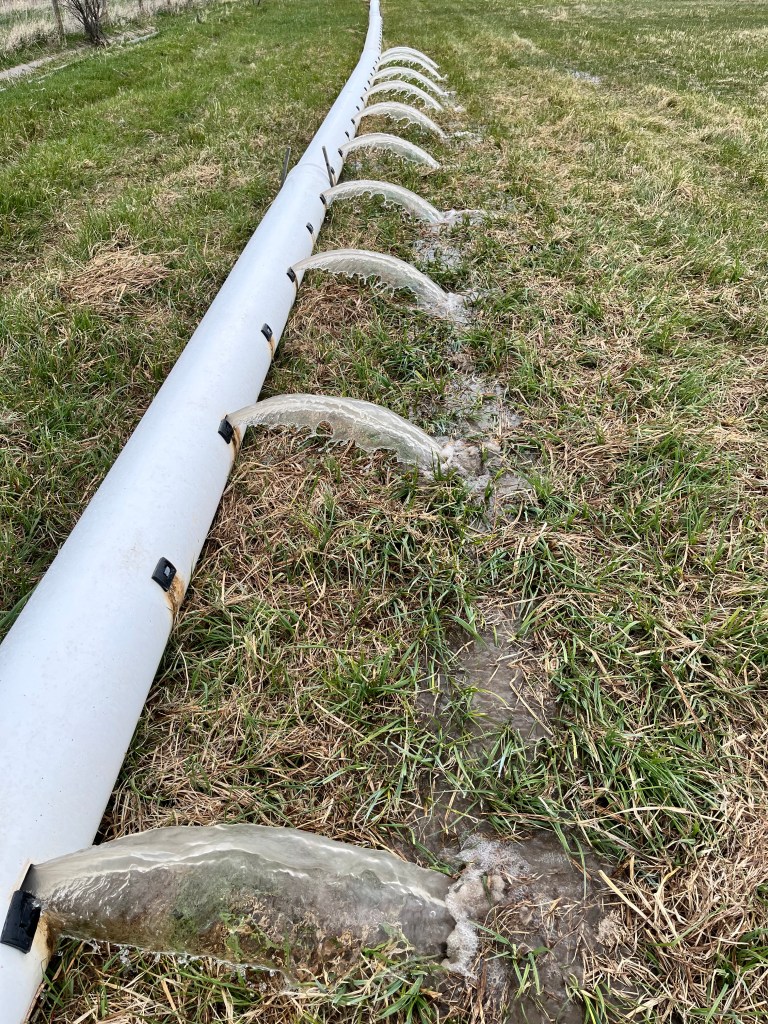
Here’s a view from behind the pipes, as the water flows out into the fields.
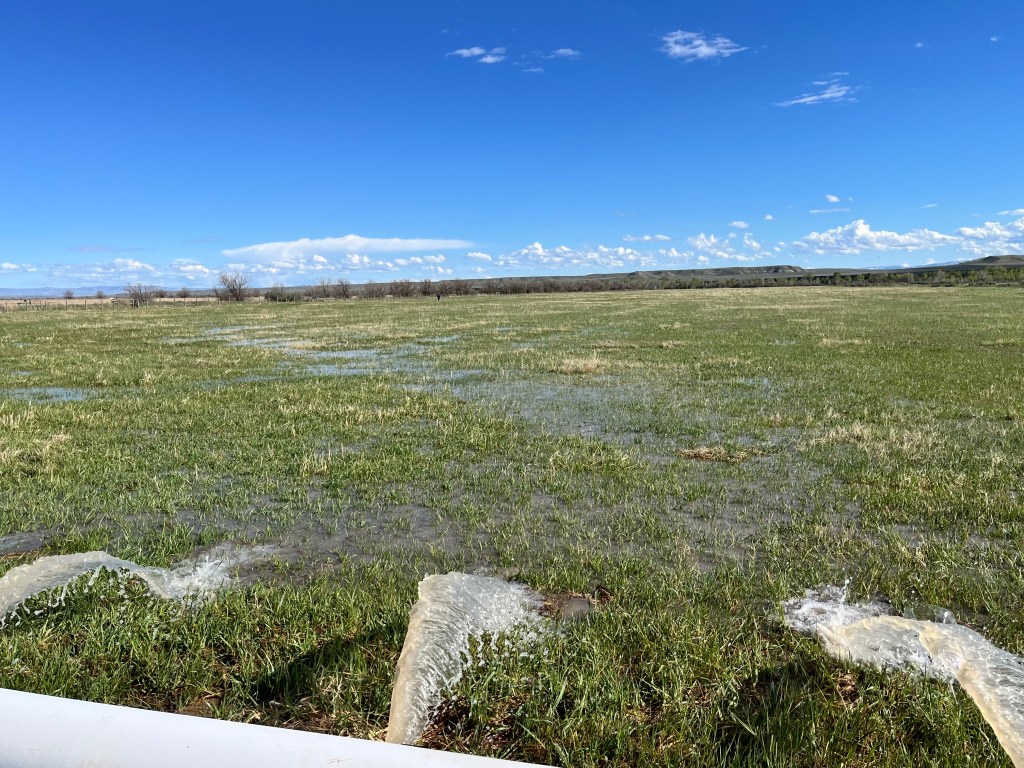
The fifth field that we water uses an “old school” method of watering. There is a trench around that field, and we install a tarp in the ditch to catch the water, and let it flow out on to the field. We move the tarp once a day to a new position on that field.

WHERE DOES THE WATER COME FROM?
In 1921, the LeClair Irrigation District was formed in Riverton, to provide water to 15,000 acres of land in the community. The water comes from the Wind River in Riverton, and has channels throughout the community that distribute the water to various landowners. Over a mile from Brad and Joanne’s property is their main gate off the canal. This gate is shared by another neighbor. The gate is controlled by a “ditch rider” employed by the District. In the Spring, the ditch rider will unlock all the gates for the landowners to use for the summer.
Once all the pipes are installed, we will open up the main gate.
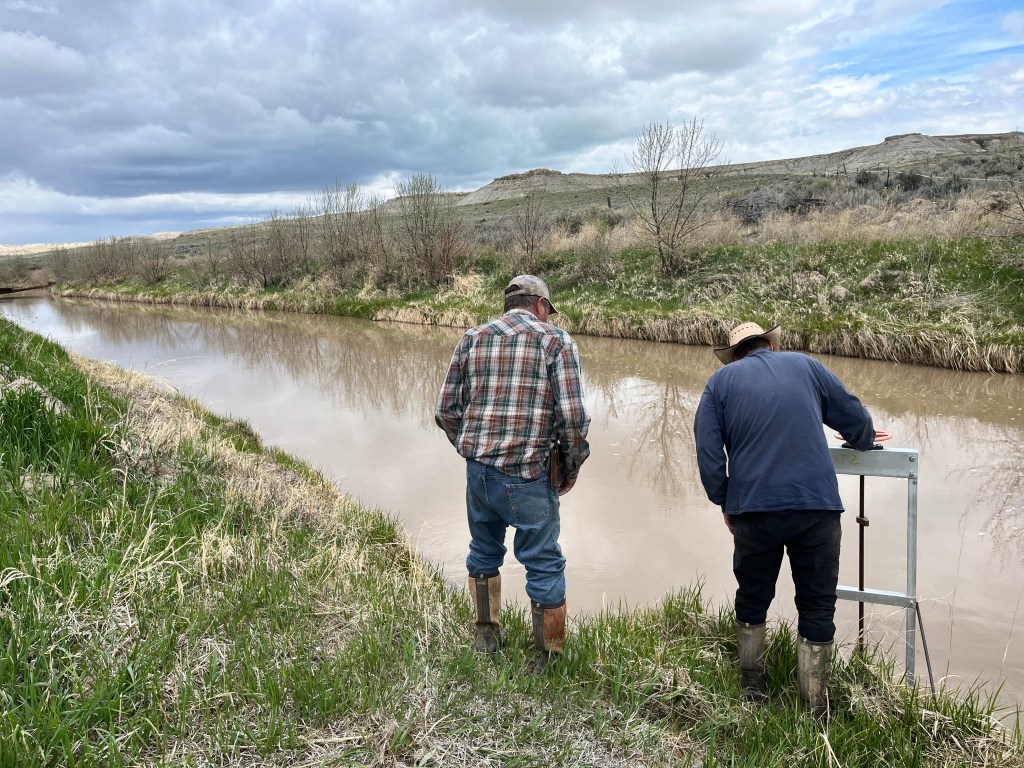
That water flows about 1/2 mile to a box with two gate valves. One is to divert water to Brad’s property, and the other flows to Brad’s neighbor.
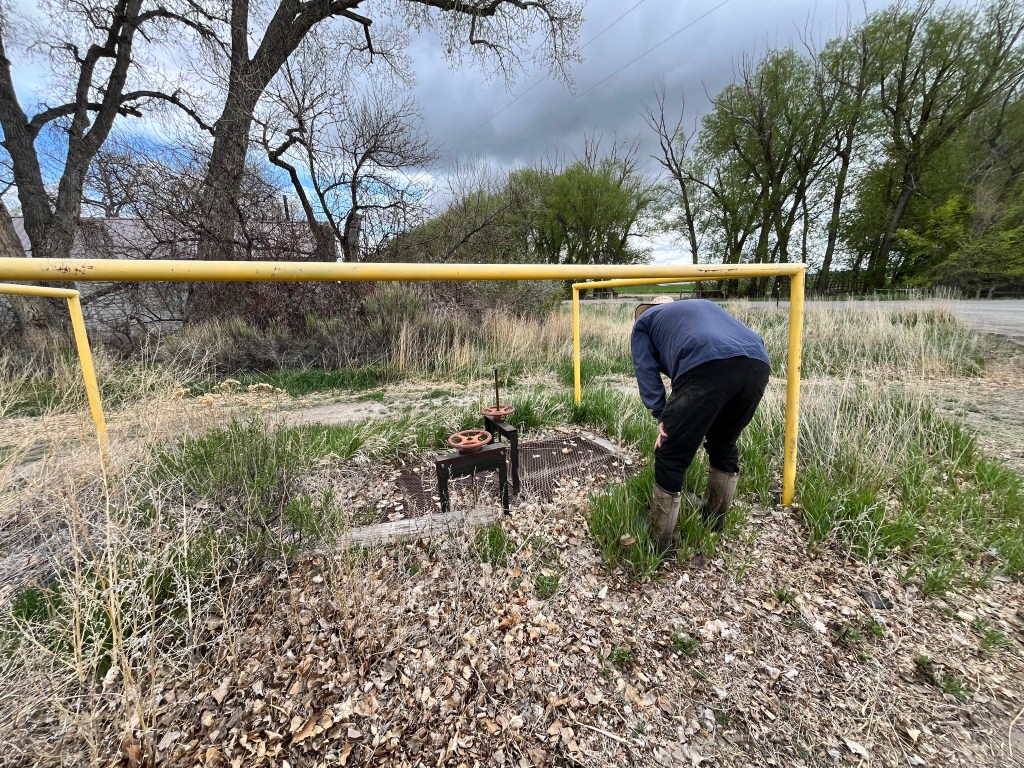
Once the water is flowing, we will open up the pipe to Brad’s property, and then another 1/2 mile down the road is his water box/gate. The two valves control the water to four fields on the east and one field on the west side of his property (the one with the drainage ditch).

This is a view down in to the box. You can see the two gate valves that can be opened up to divert the water to the fields.

Brad’s neighbor has one big field that he waters, and he uses a pivot for his watering system. The pivots are more water efficient than the flood irrigation.

By the end of May, it was time for all the horses to leave. Hope they have a good time!

We have learned more than we ever thought about water on this job! It’s amazing all the engineering that went in to creating the water district over 100 years ago. Some smart, forward thinking people!
Quote of the Day: “We forget that the water cycle and the life cycle are one.” — Jacques Yves Cousteau
 Liv2RV