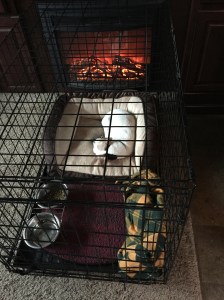
I’m still in jail, awaiting freedom!

Hello everyone, it’s me Makena, your favorite dog blogger!  It’s time for my update on the dog’s life on the road.

makena blogging 2-09-2014

Keeping my peeps informed!

For those that are new, I injured my back last fall (too much playing I guess!).  I was shut down and had to spend several weeks “in jail” inside a big crate (thanks Dave and Angie).

By January I was feeling better, and had my freedom back, but then I tweaked my back again.  In April, my mom took me back to the vet, and they did another x-ray, and my vertebrae has not completely fused together yet.  So Dr. Alex put me on some steroids, and said I needed to remain off my paws until I can heal up some more.

I’m starting to feel better, and hope to be able to walk off leash again out here in Wyoming.  After all, what’s a dog to do with 100 acres of land to explore?  My parents mentioned the 4th of July as my target date to gain my “freedom.”  In the meantime, I spend my days back in jail…oops, I mean the kennel, while they are busy working.

IMG_1213

It has been raining a lot this past week. I really don’t like being inside the 5th wheel when it rains, as it is just too noisy. But my mom always says “no rain, no rainbows!” She always looks for rainbows when it stops, and she did get this photo the other day right outside the RV.

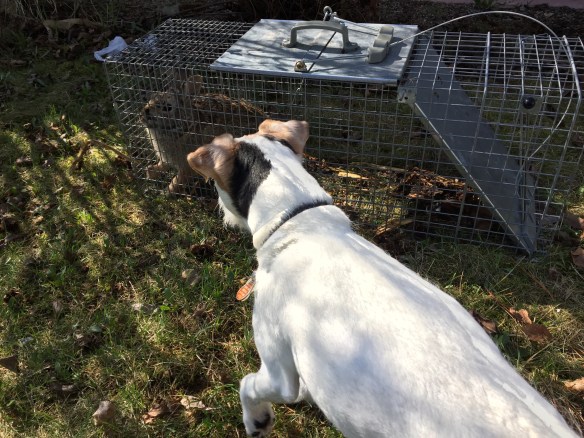
Before we came out to Wyoming, we stayed at Camp Meyer (Doug and Linda’s house, Dan’s sister) in Hortonville, Wisconsin. I had my first face to face with a rabbit that was caught in a rabbit trap.  I was a little afraid at first, but when I realized it was stuck in jail (I could sympathize) then I moved closer to it.

Don’t worry, it was released unharmed. I told it to stay away!

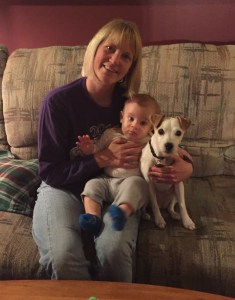
On our way out to Wyoming,  we stopped in Minnesota so I could visit with my cousin Simon.  He’s 13 months old now.  Here we are last year, when he was about 6 weeks old.

img_2405

And about 6 months later…

img_3184

Last year, I was not impressed with him, as he really didn’t do anything.  But now that he is 13 months of age…

img_1849

I think this picture thing might become a tradition. Hopefully Simon is the only one that puts on weight over time! At least that is what my Mom hopes.

He’s finally in the “trainable mode”.  I was able to teach him how to drop food during lunch time!

img_4186

We worked on scratching my ears…

And I taught him how to watch for squirrels from the upstairs window at Gary and Julia’s house, Simon’s grandparents (Dan’s brother).

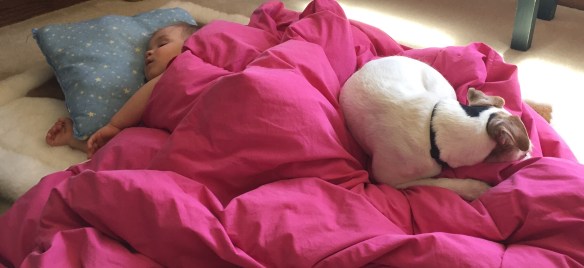
It was a busy day with my cousin, and we were both exhausted after a long day of playing!

Yes, he’s now one of my favorite cousins!  Food, scratches, and naps.  What more could a dog want?!


Quote for the day:  “Dogs have boundless enthusiasm but no sense of shame.  I should have a dog as a life coach.” – Moby

Little Rock and Branson

We enjoyed our brief visit to the City of Little Rock, Arkansas.  Although we did not have time to tour the state capitol building, we did a quick drive-by.

DSC05157 (2)

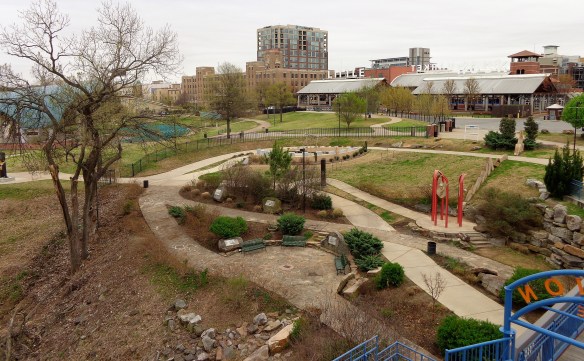
The downtown area is very nice, very pedestrian and bicycle friendly.  There are two pedestrian bridges that cross over the river, which makes for a nice walking/bicycling loop through the city.

DSC05095 (2)

A large park along the river has an amphitheater for concerts, as well as a weekly farmers market.

DSC05092 (2)

The Little Rock police department has this cute little car for patrolling the downtown area.

DSC05097

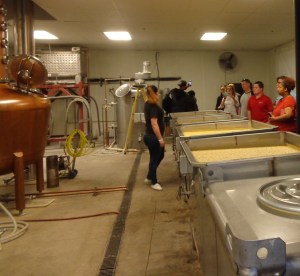
There are numerous craft breweries, and one whiskey distillery that offer tours (all within walking distance of the campground!).  We did take a tour and tasting with a large group at the Rock Town Distillery.

DSC04954 (2)

DSC04960 (2)
DSC04952And we did stop in for a sample (or two) at the craft breweries, many of them in old warehouses.

DSC04964After our time in Little Rock, we started heading north back to Wisconsin.  We did make a quick two-day visit to Branson, Missouri, just to see what the city was like.  In one word:  touristy!  It rained the entire time we were there, and most of the attractions had not yet opened for the season.

The city itself is well-organized, as the map covers red/blue/green/yellow routes.  We thought this was a great idea, and made finding attractions very easy.  You didn’t need to know what street it was on, just the color of the route.

The main attraction of Branson is the musical shows, and they have something for everyone:  Oldies, country, gospel, comedy and many tribute bands for Abba, Fleetwood Mac, Temptations, etc.  We had time for one show, and, at the recommendation of the person at our campground, we went to see “Six.”  It was very good.

We even talked about the possibility of doing a work camping job in Branson sometime in the future, and looked into a couple of the campgrounds.  Many of them offer complimentary tickets to the shows and other attractions as an incentive for working there.  It would be a great way to catch a lot of shows, and save a lot of money at the same time.

While we were sitting in the theater before the show started, Dan spotted a former co-worker/teacher/coach from Lancaster High School, Dan’s first teaching job out of college.  He had a great time catching up during intermission on the past 30 years.

The two of us really enjoyed our “touristy time” traveling from Florida to Texas, and then back up to Wisconsin via Oklahoma and Arkansas.  We were able to see and do many things, and we especially enjoyed our visit with my sister LuAnn and her family (and congratulations to our niece, Alicia, who just graduated this past weekend from high school!!!).

It has made us think about what we want to do in the future, as far as traveling and working.  We need to find more of a balance between the two, and may look into some short-term volunteer positions, which would allow us to travel more frequently.

Quote for the Day:  “A good traveler has no fixed plans, and is not intent on arriving.” – Lao Tzu

USS Razorback (SS-394)

About 1/4 mile from the Downtown Riverside RV Park in Little Rock, Arkansas where we were statying, is the Arkansas Inland Maritime Museum, which has a submarine, USS Razorback, and a WWII Tugboat, USS Hoga, on display.  The USS Hoga is not open for tours at this time, as they are trying to eliminate/contain the asbestos that is present on the boat.

DSC04992 (2)


The USS Razorback was commissioned on April 3, 1944 and served in World War II, the Cold War and the Vietnam War.  She received five battle stars from WWII and four from Vietnam. On November 11, 1970, the US Navy decommissioned the sub, and sold her to the Turkish Navy.  In 1971, the Turkish Navy commissioned her as TCG Muratreis, and she remained in service for the Turkish Navy until August 8, 2001.  The submarine became the longest-serving submarine in the world.    In 2002 a group of submarine veterans and the City of Little Rock began the process of acquiring the sub to bring it back to the United States and open up a museum.  Here is a view of the USS Razorback from a nearby pedestrian bridge.

DSC05089 (2)

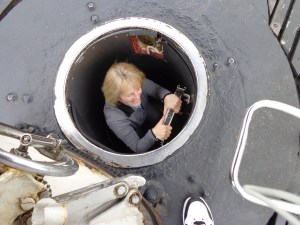
Guided tours are available, and you learn a lot about life on a submarine, both from the guide, and a small museum on the premises.  Ten officers, and 70 enlisted men served on this 311 foot long submarine.  Entry to the submarine remains the same way since 1944, right down the hatch.  And if you don’t like tight spaces, you should probably skip the tour.

DSC05005

The front and back of the sub contain the torpedo areas.

DSC05049

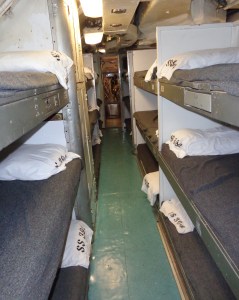
The enlisted men’s quarters.

DSC05021

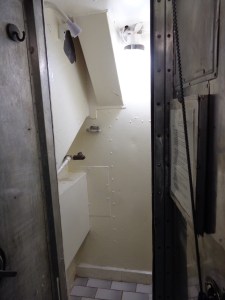
Shower facilities. Yes, it’s a closet without a door.  And from what our guide told us, showers were limited to one per month!

DSC05046To save space, the dining room tables had built-in board games for their entertainment.
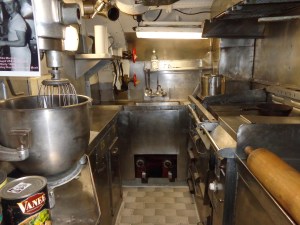
DSC05024And the deluxe, gourmet kitchen for the cook!

DSC05025

The center of the sub contained the operations area.

DSC05033
DSC05030
The museum has a display of patches from other WWII submarines.

DSC04996 (2)

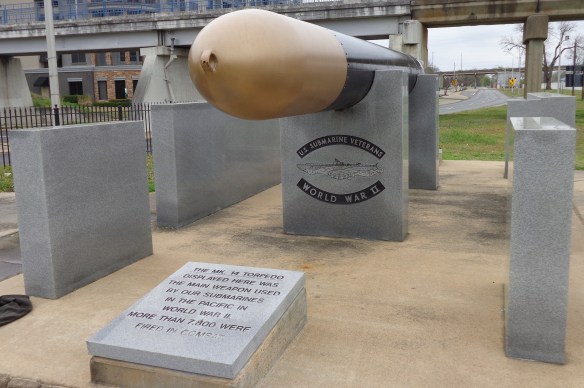
The grounds of the museum contain a memorial to the fifty-two submarines that were lost during World War II, and to the men that made the ultimate sacrifice to our country.

DSC05080 (2)

DSC05085 (2)

Quote for the day:  “When I lost my rifle, the Army charged me 85 dollars.  That is why in the Navy the Captain goes down with the ship.” – Dick Gregory

The Little Rock Nine

Prior to our arrival in Little Rock, Arkansas, I had made a reservation with the National Park Service to visit Little Rock Central High School, which is both a historical landmark and an operating high school.  During the school year, tours are only offered twice a day, and only while the school is in session.  Reservations are required.  Across the street from the school, the Park Service has a visitor center with exhibits, and many audio recordings to listen to from the students, teachers, and residents of Little Rock that give first hand stories about the events that happened in 1957.  For us, this was one of the most impressive and informative National Park Service tours we have ever attended.

Little Rock Central High School was built-in 1928 at a cost of $1.2 million (yes, that’s million…in 1928!)  It is the most impressive high school we have ever seen.  At the time our of tour, there was a group of students from Chicago on a field trip, and they were amazed at the school.  Since it is an operating school, the tour is very limited to the main entrance, the auditorium and the cafeteria.  We would have loved to roam the halls of the building.  You could just feel the history.  Other than security cameras and elevators, it seems to have been left in its original state.  The staircases had wooden banisters, and the auditorium still had the original wooden seats.  It has a current enrollment of 2422 students for grades 9 – 12.  The school continues to thrive today, and is considered one of the 16 best schools to prepare students for college with over 177 different courses offered, 30 advanced placement classes, and five foreign languages taught.

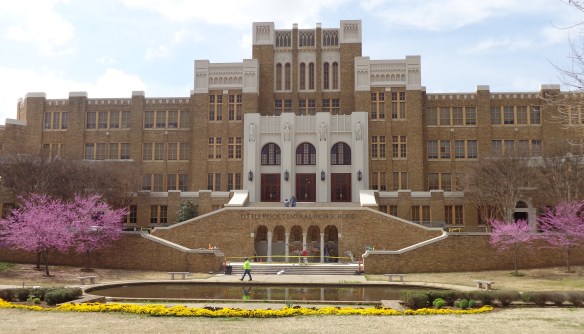
The school is so big, I had to do a panoramic shot to get the entire front of the building in the photo.  There are over 100 classrooms in the building.  There were about 60 people in our tour group, and I think all of us said “wow” when we first saw the school, except for the one student from Chicago who remarked ‘our school is trash compared to this!’

DSC05130 (2)

Here is a close-up of the middle section of the school, where the main entrance is.

DSC05131

So why is this the only high school in America designated as a National Park?  Time for a brief history lesson.

“We the people” are the first three words of the Constitution as it was written in 1787.  But who does “we” represent?   White male landowners.  Over time, through amendments to the Constitution and the Bill of Rights,  the definition of “we” has expanded.   Some of these rights came as a result of protest, and the visitors center has details about how the rights of people have expanded as a result of individuals protesting.   Through protest, comes change.

DSC05110 (2)

DSC05111 (2)

In 1954, the US Supreme Court outlawed segregation in elementary and secondary schools in the Brown v Board of Education of Topeka, Kansas case.  The schools in the Southern states were slow to begin the process of integrating schools, which would allow students to go to the school in their own neighborhood, instead of getting bused across town.

The Little Rock school board quietly discussed how to integrate students at the high school level, and announced it would accept African-American students at Central High School.  But they only wanted a limited number of students, and would only accept those who had straight A’s and perfect attendance.  Over 200 students applied, and the school board realized that was too many.  So they continued to raise the bar on the standards.  No African American student would be allowed to participate in any athletic or club event.  No after school activities.  The students were only allowed to attend school, and must leave immediately at the end of the school day.  Eventually only 10 students were left.

This integration did not sit well with Arkansas Governor Faubus, and he ordered the National Guard to bar the African-American students from school.  On September 3, 1957, a mob gathered outside the school, along with the National Guard.  One of the parents of the 10 students, after seeing the angry mob, decided against sending their daughter to that school.  Nine students were left, but they did not attend the first day of school.

On the second day of school, the Arkansas National Guard barred the students from entering the school.  These 9 students were harassed, spit upon, and shoved around as they walked towards school.  Not by fellow students, but by the parents and community members that gathered daily around the school.  By September 20, a Federal judge rules against the use of the National Guard, and the Little Rock Police were responsible for the students safety.   On September 23, the Little Rock Nine (Terrence Roberts, Elizabeth Eckford, Ernest Green, Thelma Mothershed, Minnijean Brown, Jefferson  Thomas, Carlotta Walls, Gloria Ray and Melba Pattillo) finally entered the high school.  But the local police were overwhelmed by the angry mob and a riot broke out.  The police removed the students from the school.

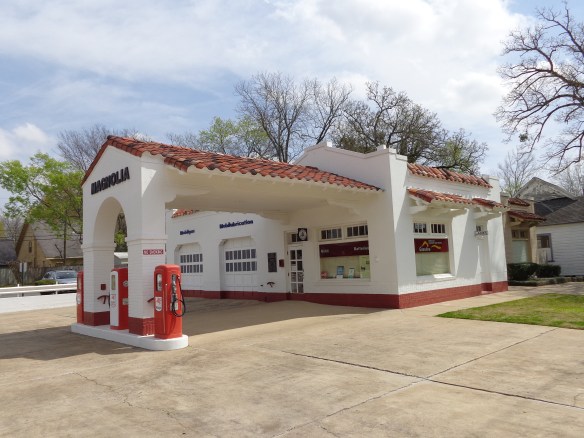
By this time, media from around the country were broadcasting multiple times a day from the school.  A local gas station, which had a pay telephone, was set up for the reporters.  That gas station, across from the school, has been preserved as part of the history. (gas was 22 cents a gallon, by the way!)

DSC05135

People around the country were both horrified and supportive of what they were seeing coming out of Little Rock.  But President Eisenhower had seen enough, and federalized the Arkansas National Guard.  In addition, he sent in 1200 soldiers from the 101st Airborne Division to restore order and protect the students.  The soldiers escorted students into the school, and remained inside the hallways of the school to protect the nine students.  The soldiers were not allowed inside the classrooms or bathrooms of the school.  As a result, the nine students were physically and verbally abused in the classrooms and bathrooms by fellow students.

In 1957, there were around 2000 students attending the high school.  About 200 of the students were constantly harassing the nine students.  In listening to the audio recordings of the Little Rock Nine detailing their experiences, it wasn’t the action of the 200 students that bothered them, as much as the inaction of the 1800 students that just stood by and did nothing.  They called them the silent majority.

One of the nine students was expelled, after she was physically assaulted by a group of female students.  She did not physically retaliate, but called them “white trash.”  After her expulsion, students passed out cards stating ‘one down, eight to go.’  By November, the Airborne Division leaves, and the nine students continue to endure verbal and physical assaults for the remainder of the school year.

On May 25, 1958, Ernest Green became the first African-American student to graduate from Central High School.  In attendance at his graduation, was a man who wanted to watch this historical event, Dr. Martin Luther King.

But that’s not the end of this fight for integration.  Governor Faubus shut down all the schools in Little Rock for the 1958-59 school year, in order to block the integration of the school district.  A Federal Court ruled the closing of the schools was unconstitutional, and the schools reopened in August 1959.

All of the Little Rock Nine not only graduated from high school (not all from Central), but went on to college and had very successful careers.  Jefferson Thomas passed away in 2010 from cancer, but the other eight are still alive.

If you are ever in the Little Rock, Arkansas area, please try to do this tour.  Even if you only have time to look at the exhibits in the visitors center, it is worth the time.  What these students had to endure was truly heartbreaking, but their will to persevere is inspirational.


Quote for the day:  “Any time it takes 11,500 soldiers to assure nine Negro children their constitutional rights in a democratic society, I can’t be happy.”  – Daisy L. Gatson Bates


The Clinton Presidential Center

After our visit to Oklahoma City, we headed a short distance east to Little Rock, Arkansas.  We decided to stay right downtown, at the Downtown Riverside RV Park.  It is right on the river, and within walking distance to many attractions.  Here is a view from the pedestrian bridge that crosses over the river.  Yes, it is more of a “parking lot,” but the fact that we could walk to almost everything we wanted to see was a big plus.

DSC04843Just on the other side of the river is the Clinton Presidential Center and Park.  This was our third President library to visit, after Abraham Lincoln and George W Bush.

DSC04851

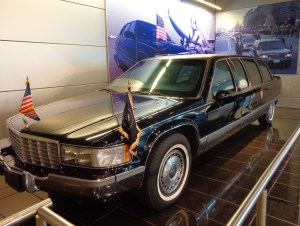
The museum contains three floors of exhibits, along with a special traveling exhibit.  The first floor has the presidential limousine, gift shop and conference center.

DSC04858

The second floor has a time line of the presidency, with a  year by year display of events, bills passed, and other historical information on the presidency of William Jefferson Clinton (born William Jefferson Blythe III).

DSC04921

The second floor also has alcove exhibits on various policy accomplishments during his 8 years in office.  And yes, there is one exhibit on the four-year special investigation that was started in 1994 to investigate the Clinton’s Whitewater real estate purchase.

Technology changed quite a bit during the 1990’s, and a push was made to expand the internet into schools.

DSC04918

The Brady Bill and a 10 year ban on assault weapons was passed.  Only 19 guns were banned, and by 2000, crimes committed with guns dropped 46 percent.

DSC04925

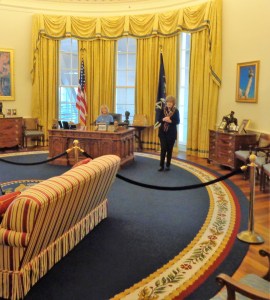
A replica of the oval office as well as the cabinet meeting room is on display.

DSC04913 (2)

DSC04931

The third floor contains the gifts that were received, along with photographs and displays from state dinners.

DSC04871

There is a formal setting from one of the state dinners.

DSC04869

Socks, the cat, also received gifts, including this patriotic cat basket.

DSC04892


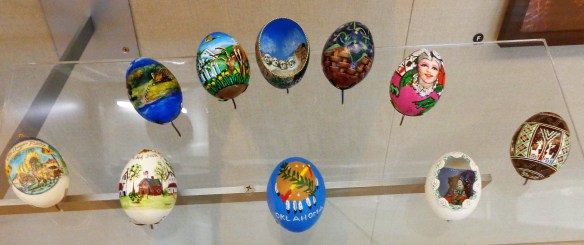
The Easter Eggs, from the annual White House Easter Party.

DSC04881

Dale Chihuly created two identical glass sculptures, entitled Crystal Tree of Light,  for the White House Millennium Celebration on New Years Eve, 1999.   This one was donated to the museum. It’s about 6 feet tall.

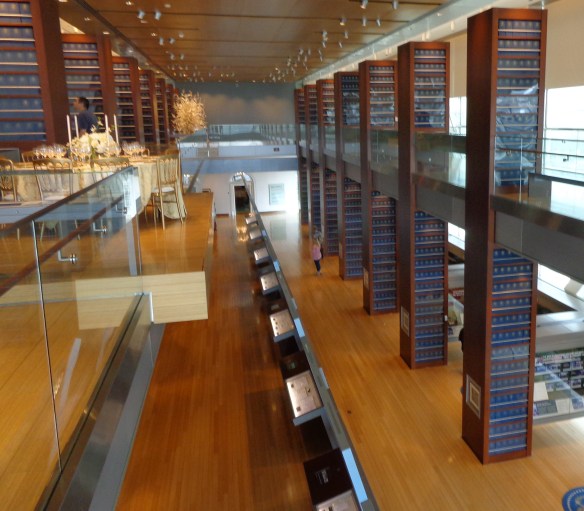
DSC04884In this overview from the third floor, you will see a lot of blue boxes.  There are 4,536 boxes in the museum, all containing letters written to the President and First Lady.

DSC04865

The current traveling exhibit is ‘Louder than Words – Rock, Power, and Politics’ was very interesting.  Many of the items were on loan from the Rock and Roll Hall of Fame museum.  It covered the period of Eisenhower through Trump, their campaign songs (Trump was the only president without one), and covers the scandal in the music industry.  Alan Freed, a DJ who is credited with the phrase “rock and roll” was one of the many DJ’s who accepted money to play certain music on the radio.  At the time, it was legal to do so, but in 1959 Congress held a number of hearings on the “payola” scandal, and made it illegal to record companies to pay radio stations to play their music.

DSC04938

Songs were written based upon current events and for some of us listening back on them can bring us back to a different place and time.

DSC04899

DSC04902

How we listen to music over the years has changed as well, from 45’s to 8-tracks to the Ipod.

DSC04943

We had an enjoyable time visiting the Clinton Museum, and plan on continuing our quest to visit more presidential museums.  No matter your politics, it is a fun look back in time.

Quote for the Day:  “When I took office, only high energy physicists had ever heard of what is called the Worldwide Web…Now even my cat has its own page.” – William J Clinton


Oklahoma Firefighters Museum

Another hidden gem of a museum that we discovered in Oklahoma City is the Oklahoma Firefighters Museum. The small museum is bursting at the seams with a wonderful display of equipment.  Retired firefighters volunteer at the museum, and they are an excellent resource for discussing the equipment on display.

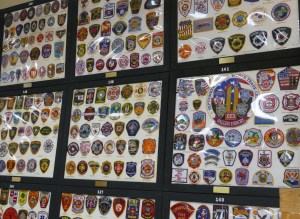
There is a nice tribute to the firefighters that responded to the Oklahoma City Bombing, including patches from the departments that assisted in the recovery efforts.

P1010622

There is a small tribute to “America’s First Fireman” Benjamin Franklin. In 1736, he created a volunteer fire department in Philadelphia.  Volunteers supplied their own buckets.

P1010675

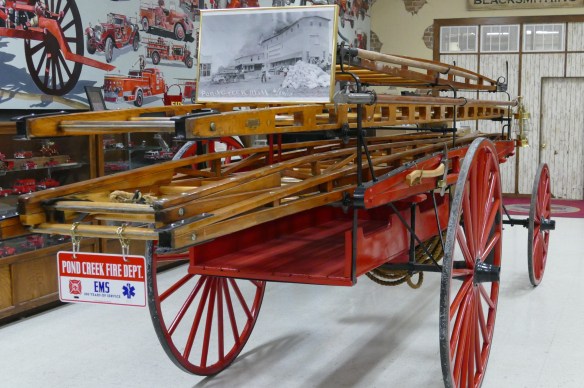
The museum has a display of firefighting equipment over the years, starting with several hand drawn pieces of equipment.  As “prehistoric” as these trucks look, they were a technological advancement over firefighters carrying buckets of water to fight a fire.  This is the 1870 New Richmond Hunneman Hand Pumper.  It was a Class A Pumper that required 24 men to operate it at full capacity.  The hose was rolled up and stored on the attached rear cart.

P1010629

Thanks to a wonderful volunteer, Dan was able to demonstrate how a firefighter pushed the truck to a fire.  The Hunneman pumper is named after William Cooper Hunneman, an apprentice of Paul Revere, who designed the pumper truck.

P1010638

This was a hand drawn ladder truck.

P1010649

The next generation of technology was the horse-drawn equipment.  Two horses would stand near the steamer, and the harnesses would drop down onto the horses when the fire alarm went off.

P1010665

Here is a close-up of the Steamer that was in service until 1925.  It could pump 300 gallons per minute.

P1010661

Notice the above truck is red.  There is also another horse-drawn vehicle on display, a white carriage.  This is the vehicle used by the Fire Chief.  It is smaller, so he could get to the fire scene quickly.

P1010669

The advent of the horse-drawn firefighting equipment is when the Dalmatian became the mascot of firefighters. Horse thievery was a problem, and Dalmatians were used in fire houses to protect the horses and guard the fire station.  Dalmatians adapted well to being around horses, and when the alarm went off, they led the way of the horse drawn cart, and fended off other dogs and animals that would try to approach the horses.

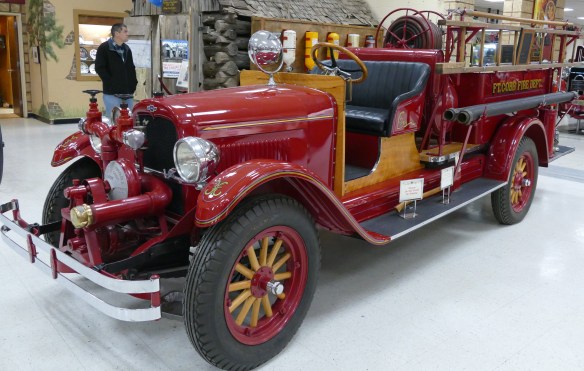
Horses were eventually replaced by motorized equipment.  This is a 1928 Chevrolet Chemical Hose Truck, used by Fort Cobb, Oklahoma until 1941.

P1010671

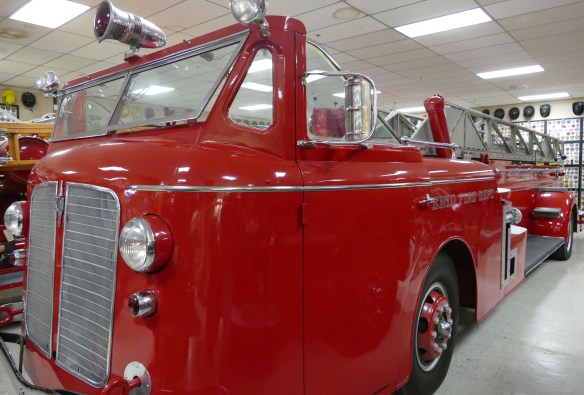
This is a 1940 American LaFrance 85 foot ladder truck, used by the Enid Fire Department.

P1010697

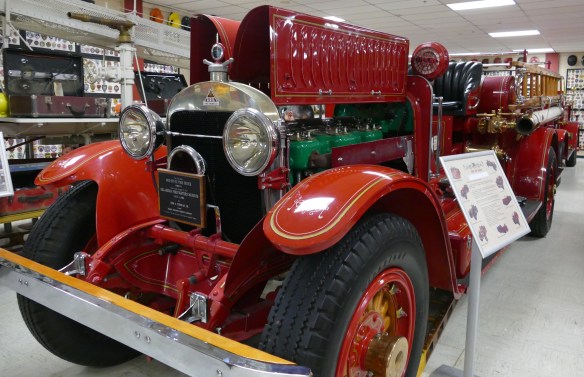
A 1920 Stutz engine was used in Virginia.

P1010707

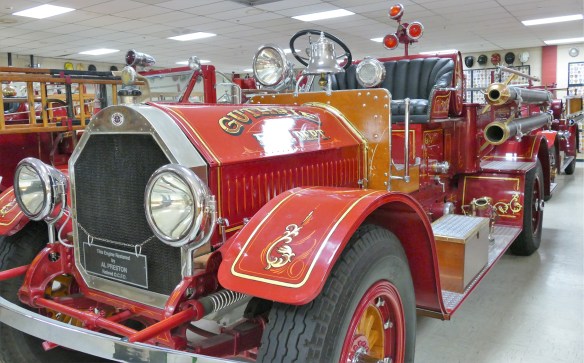
This is a 1919 Seagrave Pumper used by the Guthrie Fire Department.

P1010696

The walls are covered by an extensive collection of patches from fire departments.

P1010680

Outside, there is a memorial to the fallen Oklahoma firefighters.

P1010742


The museum is hoping to raise enough money to build a bigger building, which will offer an even better experience for visitors. We salute all fire fighters and first responders who put their lives on the line everyday to protect us and help us in our greatest hour of need.

This will be my last post on Oklahoma City.  We certainly enjoyed our visit to the area, and left many things to see and do in the future.  The city was a wonderful surprise to us, and we will be back!


Quote for the Day:  “People are always asking me how it is that firefighters run into a burning building when everyone else is running out.  Courage is the answer.” – Chief Kennedy in Ladder 49


The 45th Infantry Museum

During our visit to Oklahoma City, we spent a morning visiting The 45th Infantry Museum. The Division was established after World War I, from the states of Oklahoma, Colorado, Arizona and New Mexico.  The division was called into service during World War II, and served with General George Patton’s US 7th Army division.  After WWII, the division was just for the state of Oklahoma, and reverted back to National Guard status.

The 45th Infantry Division was again mobilized for the Korean War and fought in several battles.  In 1969, the division was disbanded and restructured into several divisions.

P1010580

45th Infantry Museum and Plane

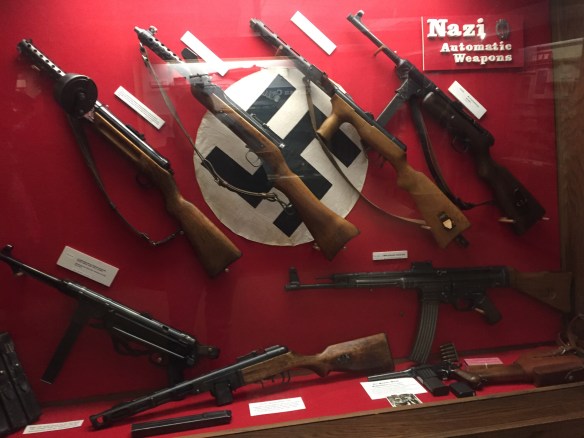
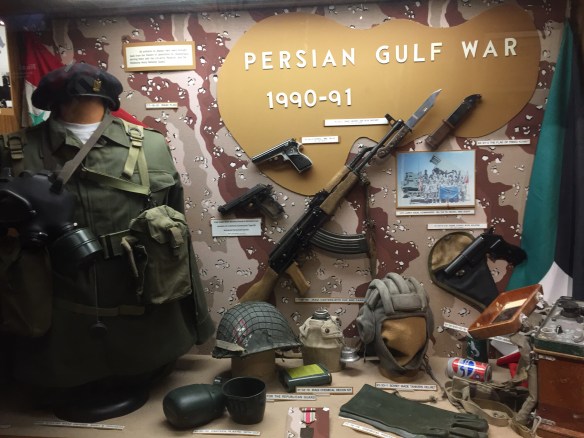
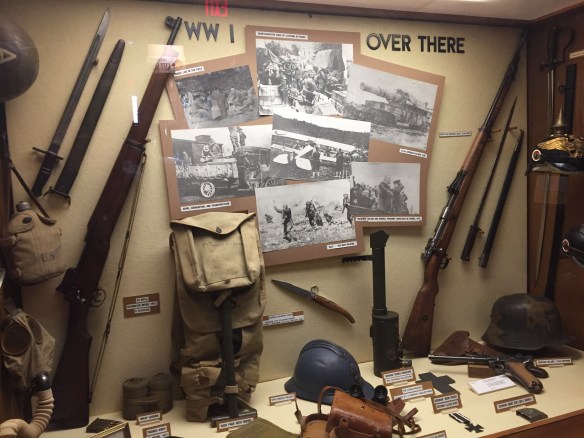
The museum contains an extensive collection of military weapons from the Revolutionary War through Vietnam.  It also contains weapons from other countries that were confiscated during various wars.

img_1689

The size and power of the weapons changed between the Revolutionary War and World War II!

img_1719

img_1669img_1664

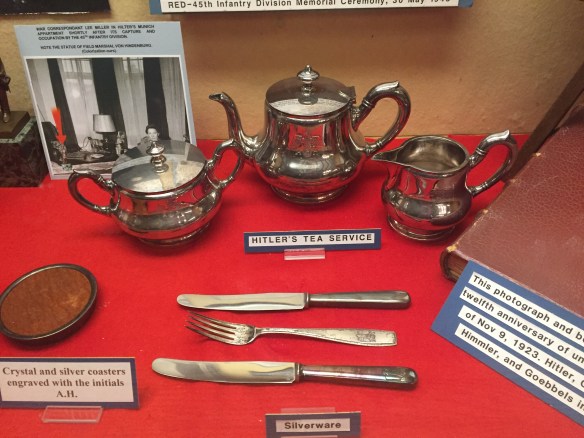
Members of the Division were part of a raid on Hitler’s residence, and brought back a lot of his personal items.

img_1649

img_1647

Display cases are filled with “hi tech” equipment, used during the wars.  I’m not sure how effective this gas mask was.  Seems like it is just attached to a tin can.

img_1636

img_1634

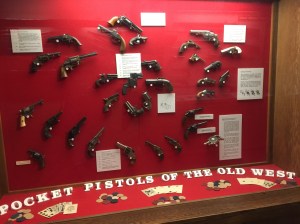
The museum has a large collection of pistols as well.

img_1681

img_1683Many jeeps, ambulances, and other vehicles are on display indoors.

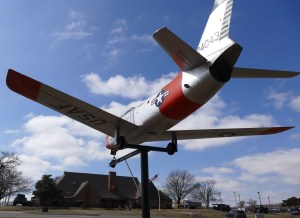
Outdoors, the museum has several dozen tanks, aircraft, helicopters and monuments on display.  You can spend several hours going through the museum.

For me, the most fascinating part of the museum was a small display on the history of the Division’s insignia.  When the Division was established, their emblem was a yellow swastika on a red square, to honor the Native American and Spanish Heritage cultures of the four states forming the division.  The swastika was an Indian symbol of good luck. The Nazi party also adopted the swastika around the same time.  The division eventually stopped wearing their insignia, as the swastika took on a new meaning, and they did not want to be associated with the symbol.  What was a symbol for good luck became a symbol for evil and hatred.  The Thunderbird, another Native American symbol,  became their new emblem, using the same yellow and red color scheme.

img_1642We had never heard about this museum, or the history of the 45th Infantry Division before.  It was truly a little gem, and we would highly recommend a visit.  There is just so many things on display, and it was hard to pick out photos for this blog, as I have so many.

Quote for the Day:  “My first wish is to see this plaque of mankind, war, banished from the Earth.” – George Washington

Time to head West

I still have a few more blogs to do on Oklahoma and Arkansas, but I thought I better get to “current time” on the blog, since a few family and friends have wondered where we are.  We will be leaving Wisconsin today, and heading west to our summer job at Luton’s Teton Cabins near Grand Teton National Park in Wyoming (30 miles south  of Yellowstone National Park).

We made it back to Wisconsin for a surprise Easter Day (April 1st) visit with Dan’s parents.  They didn’t think we would be arriving so soon, as they thought we were in Branson, Missouri.  Our fifth wheel is parked at Dan’s sisters house in Hortonville, but we spent most of our time at his parents house in Oconto Falls.  Dan’s father was diagnosed with stage 3 bladder cancer in January, and we wanted to be back in time for his surgery. As mentioned in an earlier blog, Dan did fly back to Wisconsin for a few weeks when his Dad started his chemo therapy treatments back in February.

We did make it down to the Milwaukee area for a quick visit with family and friends and to take care of some dental and doctor visits.  However, the bulk of our time has been spent at Dan’s parents house.  In addition to pre-surgery visits, Dan’s parents had a few “honey do” items for Dan.

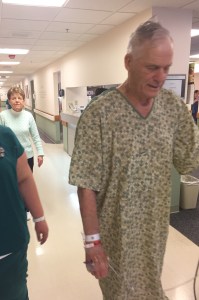
On April 19, his dad (Stu) underwent a 9 hour surgery to remove the bladder and prostate, and reattached his ureters to a stoma, where the urine will now come out.  The surgery was very successful, and after 7 days in the hospital, he came back home, to finally get some rest.  The nurses in the hospital were quite impressed by how quickly he recovered.  He walked multiple times each day in the hospital, followed under the watchful eye of Joan!

img_4153

Every day he has been getting stronger and more independent (well, as much as Joan, Dan’s Mom, will let him….!) He walks everyday and he is hoping to hit the golf course very soon! We are very thankful that we had the time to spend with them, and help both of his parents adjust to their new way of life.

The same day as Stu had his surgery, my brother-in-law John (that we just visited in Texas) had heart bypass surgery.  He is on the mend as well, but they have been through a lot in the past 10 months.  We are thankful that we could visit them in March, and hope to be back to Texas within the next year or two.

The weather in Wisconsin right now is perfect, mid 70’s.  It’s been a huge change in the past 5 weeks.  We were snowed in a few weeks ago, with over 16 inches of snow by Dan’s sisters, and 30 inches of snow by Dan’s parents!  It was an official blizzard, and everything was shut down in the area.  Many of the high schools had their Proms cancelled.  And of course, we ran out of propane!  We have two 40 pound tanks for our fifth wheel.  When the stores finally opened back up after two days, it was a brisk 45 degrees in the fifth wheel! (which isn’t so bad when you have a hot flash!)   Since we are only plugged in to a 20 amp circuit, we can only run a space heater, in addition to the propane furnace.

img_1785-1

As usual, we didn’t have time to see everyone that we wanted, but are grateful for the time we did have here, and the family and friends we did meet up with. We also made a quick visit to check out our friends Keith and Judy’s new fixer-upper home on Kelly Lake.  They have a beautiful view of the lake from their deck, and we look forward to seeing the progress with their renovations in the future (and a 50 amp outlet!!)

img_1813-1


img_1823-1


Quote for the Day:  “A nurse will always give us hope, an angel with a stethoscope.” – Carrie Latet

Oklahoma City Bombing Memorial (part 2)

In my last post, I went over  the outdoor memorial for the Oklahoma City Bombing Memorial. And I want to apologize for having the wrong year, 1985, instead of 1995.  The post has been edited, but if you receive the blog via e-mail, it had the wrong date.

Today will cover the Oklahoma City National Memorial Museum.  The museum is one of the best museums I have ever visited.  It takes you through the day of the bombing, the days and weeks that followed, and has many first hand stories from the survivors and first responders.  It chronicles the investigation and trials of the domestic terrorists, and has a moving memorial to the victims at the end of the museum.

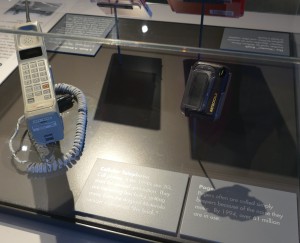
When you walk into the first of two floors in the museum, you are greeted with a large mural of downtown Oklahoma City with the words, “A day like any other” on the wall.  You will learn about the history of the Alfred P Murrah Federal Building, along with what the times were like in 1995.  There is a “technology display,” which contains these “state of the art” cell phones and pagers! (and remember the cell phone plugged in to the cigarette lighter…now called a 12 volt charger!).  Just 14% of the population was connected to the internet in 1995.
P1010809

Also on display is an old closed circuit television camera, and video taken from a nearby office building of a Ryder rental truck driving down the street in Oklahoma City, heading to the Federal Building.

You enter into ‘the hearing room’ and sit down to listen to an audio recording from the Oklahoma Water Resources Board Meeting that was going on in a nearby building.  Just a few minutes into the hearing, at 9:02 am, the tape recorder picks up the sound of an explosion.  I was struck by how loud the explosion was.  It is the only documented recording of the blast.  The doors from the hearing room open, and you walk into a room containing many artifacts from the bombing.

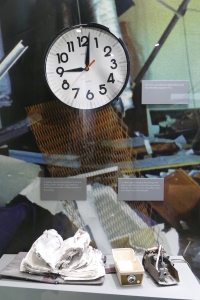
This clock, from a nearby office building, stopped at 9:02 am.  The lower left has a date book from one of the victims in the Murrah building, and the lower right portion of the photo is an electric pencil sharpener.
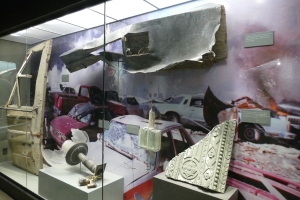
P1010824The next photo below has a piece of an elevator panel, car door frame, light fixtures and plaster found in the rubble.
P1010818

A few pieces of the bronze letters to the federal building were found amongst the rubble.  They were pitted and scarred from the blast.

P1010813 (2)

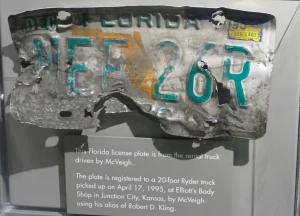
A Florida license plate was also found in the rubble, which provided investigators clues to the bombing.  The plate belonged to a Ryder rental truck.
P1010838

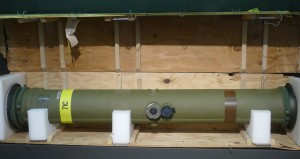
At 10:28 am, first responders were ordered to evacuate the building, as a box labeled “explosives” was found in the building.  The box was removed by the bomb squad, and rescue efforts resumed.  This was the item in that box, called a TOW missile (tube-launched, optically-tracked, wireless-guided) missile, used by the US Customs office, which was located in the building.
P1010841

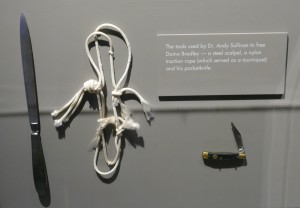
One of the many stories told in the museum, is that of Daina Bradley.  She was at the Federal Building, along with her two children, her mother and her sister.  They had gone to the Social Security Office to obtain a social security card  for her new son.  Rescuers found her trapped under a concrete beam, and they started to dig her out from under the rubble.  But then they had to abandon her, when they were ordered to evacuate the building as a result of the bomb scare at 10:28am.  Once the ‘all clear’ was received, rescuers went back to her and spent two hours trying to dig her out, but were unable to do so.  Her lower leg remained trapped, and the only way to rescue her was to amputate her leg.  An orthopedic surgeon, Dr. Andy Sullivan, attempted to amputate her leg with a scalpel, but had to abandon her after another bomb scare, at 1:48 pm, forced all the rescuers to again evacuate the building.  After the ‘all clear,’ he again returns to her, and using a nylon rope as a tourniquet, is able to complete the amputation using his pocket knife.  This was done without anesthesia. Ms. Bradley survived the bombing, but her mother and both of her children did not.  Her sister was severely injured.  Below are the items donated to the museum by Dr. Sullivan.  This is just one of the many gut-wrenching stories told in the museum.
P1010846

One of the heart-warming things I took away was how quickly, and compassionately the citizens of Oklahoma City responded to this bombing.  There are photographs of nurses running down the street towards the site of the bombing carrying hospital supplies and blankets to help the victims.  A triage was set up outside the building.

P1010834

There was a food and restaurant convention going on in downtown Oklahoma City, and those members quickly used the equipment that they brought to display at their sales booths, to set up an impromptu ‘restaurant’ to feed all the first responders.  Fire Departments from all over the country sent personnel to help with the rescue efforts.  Sadly, one of the members from the New York Fire Department that helped in the rescue efforts in Oklahoma City, was killed in the 9/11 bombing in 2001.

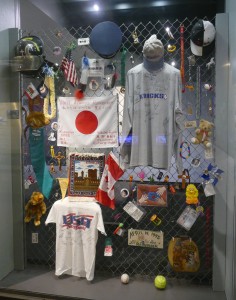
A piece of the original chain link fenced is on display at the museum, with a small portion of the items sent to Oklahoma City from all over the world.
P1010856

The museum has an in-depth timeline on the investigation and prosecution of Timothy McVeigh,  Terry Nichols and Michael and Lori Fortier.  I won’t go into too much detail on them, or the reasons behind the bombing. For me, this visit was about honoring the victims and the survivors. But I will say that McVeigh was sentenced to death, Nichols is serving a life sentence, Michael Fortier served 12 years, and Lori was given immunity in exchange for her testimony.

Timothy McVeigh was stopped at 10:17 am, just seventy-five minutes after the bombing, on I-35 by an Oklahoma State Trooper for having a missing license plate on this 1977 Mercury Grand Marquis.  During questioning, the trooper noticed McVeigh had a concealed handgun, and took him into custody.
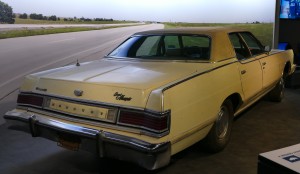
P1010859

By April 22, federal investigators had put together enough evidence from the bombing site to come up with a suspect, McVeigh, and discovered he was being held in Perry, Oklahoma on the handgun related charges.  He was taken into federal custody, and was wearing this t-shirt at the time of his arrest.  The Latin phrase means “Thus always to tyrants,” and was the phrase John Wilkes Booth shouted when he shot President Lincoln.  McVeigh’s booking photo is in the bottom corner of the photo.
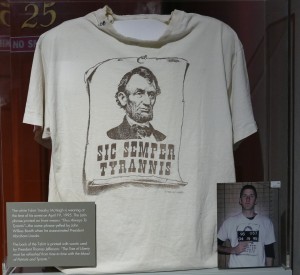
P1010849

On May 23, 1995, the Murrah Building was imploded.  At the time, it was thought there were just two remaining bodies in the building, both employees of the credit union.   They allowed the two families to hold a memorial service prior to the implosion.  After the implosion, they found the remains of three bodies.  The third person, who had been reported missing a week before the implosion by his sister, was believed to have been in the credit union as a customer during the explosion.

The last part of the museum is the Gallery of Honor, where photographs of all 168 victims are on display, along with mementos provided by family members. Putting a face with a name, and seeing the objects in the display cases, was a heartfelt way to remember the victims.   The name of every victim is read over a speaker in the room.  The room is a wonderful memorial, but difficult to walk through, without fighting back the tears.

The museum has a STEM lab, for teachers and students to learn more about the bombing, forensics and investigations, and how to engineer and build structures that can withstand both natural and man-made disasters.

The one thing I will always remember from my visit to the museum, is how well everyone came together to help each other out.  It was even noted in the museum that the crime rate in Oklahoma City was almost non-existent for weeks after the bombing. The resilience of the people in Oklahoma City is amazing. I left the museum emotionally drained, but at peace knowing good always conquers evil.

Quote of the Day:  “We don’t even know how strong we are until we are forced to bring that hidden strength forward.  In times of tragedy, of war, of necessity, people do amazing things.  The human capacity for survival and renewal is awesome.” – Isabel Allende
Oklahoma City Memorial (part one)

Oklahoma City has been a ‘bucket list’ item for me for many years.  In particular, visiting the Oklahoma City National Memorial.  April 19, 1995 is a day cemented in my memory, as it started out with an early morning telephone call from my sister Margie, saying she was in labor, and heading to the hospital.  I had asked if I should come to the hospital, and she said no, she would call later and let me know.  And then I went to work and waited and waited (remember, this was before text messaging, and the days of “instant” everything!).  But then I received word that my sister had a beautiful baby girl, Hannah Catherine!  A wonderful start to the day!

img_2263

But the world as we knew it, greatly changed at 9:02 am, April 19, 1995, with the bombing of the Alfred P. Murrah Federal Building in downtown Oklahoma City.  What started out, for me, as a joyous occasion, became a day of sorrow and confusion.  Even though it has been 23 years, I do remember that day well.  When I went to see my sister in the hospital, and met my niece for the first time, I recall my sister was emotionally drained by the days events.  She had just given birth to her first child, only to turn on the television in the morning to see babies and children being carried out of the building.  It was a horrifying scene.  Of the 168 people killed in the bombing, 19 of them were children, as there was a daycare in the federal building that many employees used.

This is a picture that I took of a photo on display at the museum, showing the devastation from the blast.

P1010839 (2)

And the site as it looks today, as viewed from a window in the museum.

P1010864

It was an emotional day 23 years ago, and it was an emotional and difficult day for me when we visited the memorial.  I had to choke back a lot of tears in the museum and at the memorial site.  I just kept thinking about what my sister had gone through that day, but kept telling myself that out of something so horrible, life does keep going on.  There are really two parts to the memorial:  A museum which chronicles the events of that day, with many first hand survivor stories, and an outdoor memorial, honoring the victims, survivors, first responders, and children.

The museum is located in a building that was across the street from the federal building. (it is the building in the foreground from the photo above).  It was an office building at the time, and was one of over 300 buildings in the downtown area that sustained damage from the blast.  Although no one was killed in this building, many were injured from ceilings collapsing, and broken glass from the windows getting blown out.

P1010898

The outdoor memorial consists of the gates of time, a reflecting pool, field of empty chairs, survivor wall, survivor tree, rescuer’s orchard, children’s area and the fence.  Today’s blog will just cover the outside memorial.

When you approach the museum from the parking lot, 200 feet of the original chain-link fence that surrounded the bomb site is still in place. Over 60,000 items were put on the fence, and have been collected and archived in the museum.   And even today, people continue to place items on the fence, especially shoes, in memory of the victims and survivors.  Many of the bombings survivors talked about how they had their shoes literally blown off their feet during the blast, and first responders reported finding many shoes, but no bodies, during their initial search and rescue efforts.

P1010788 (2)

After viewing the fence, you walk up through the gates of time.  Two very large walls that frame the time of the events.  9:01 am, when it was just another day…

P1010896

And then 9:03 am, when the time for healing began…

P1010794 (2)

In between is the reflecting pool, symbolizing 9:02 am, when the bombing occurred, and the world was forever changed.  The pool and gates of time is where N. W. Fifth Street, the street in front of the federal building, was located at.

P1010878

After the Murrah building was imploded, a few walls remained standing, despite going through not one, but two blasts.  These walls were left in place, and the names of the survivors are on one of the walls.

P1010886

An American Elm tree was located between the Murrah building, and the office building that is now the site of the museum.  Despite the blast, that tree survived, and has become known as the Survivor Tree.  Arborists have carefully maintained this tree, and every year seeds from the tree have been given out to families of the victims as well as the survivors, for planting.  It is a symbol, once again, of life continuing on from a tragic event.

P1010897

The Survivor’s Tree overlooks the Rescuer’s Orchard, to honor all the first responders, medical personnel and volunteers that helped out.  The inscription along the base of the survivor’s tree states “To the courageous and caring who responded from near and far, we offer our eternal gratitude, as a thank you to the thousands of rescuer and volunteers who helped.”

P1010907 (2)

Rescuer’s Orchard

Right in front of the entrance to the museum is the Children’s Area.  Thousands of tiles painted by children were sent to Oklahoma City after the bombing, and they have been placed on a wall.

P1010797 (2)

The most somber area is the Field of Reflecting Chairs, located where the Murrah building was located.   There are 168 chairs, each bearing the name of a victim of the bombing.  Nineteen of the chairs are small, for each of the children.  There are nine rows of chairs to represent each floor of the building, and five chairs are off to the right, representing the five victims killed outside of the building.  The chairs have a light underneath them, but we did not go back to see the memorial at night.

P1010889 (2)

P1010885 (2)

Across the street, and not part of the official memorial, is a statue, Jesus Wept, on the grounds of St. Joseph Catholic Church, which was also damaged in the bombing.  There are 19 black granite pillars surrounding the statue, for the children.

P1010912 (2)

I found the outdoor memorial to be a well-designed tribute and remembrance to the victims, survivors, first responders and volunteers that came together after this tragic event.  It was very emotional and humbling to see.

There was just too much to put in one post on this memorial.  My next post will be on the museum itself.   As I started this post about my sister Margie, and niece Hannah, I will end it with them as well.  Happy Birthday Hannah!

img_2264

Hannah and my sister, Margie

My Quote for the Day is from the quote on the back of the Gates of Time:

P1010908 (3)

“We come here to remember those who were killed, those who survived and those changed forever.  May all who leave here know the impact of violence.  May this Memorial offer comfort, strength, peace, hope and serenity.”